


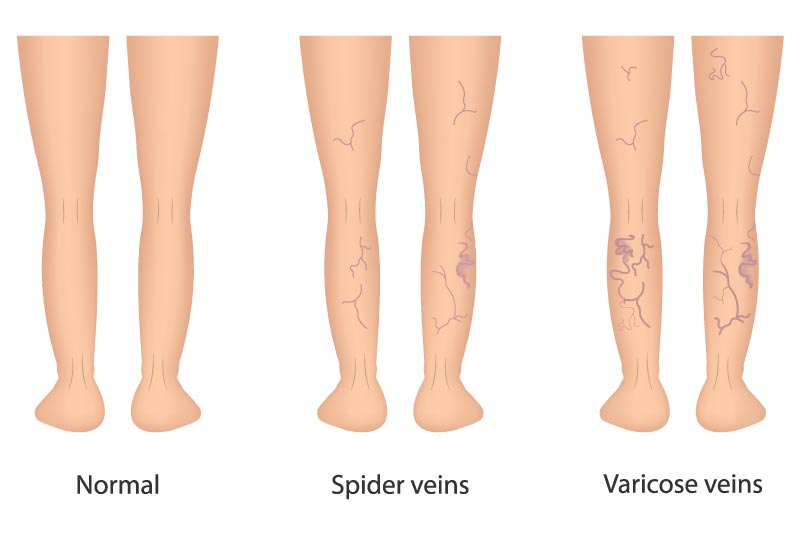
What are varicose veins and what causes them? A guide to varicose vein treatments and solutions in Side and Antalya
While admiring the endless blue sky of Side or relaxing in the cool waters of Manavgat, you should be thinking only of peace and quiet. But the pain in your legs, the swelling that increases in the evening, and the purple veins you see in the mirror can disrupt this tranquility. Varicose veins are often dismissed as a “cosmetic flaw” in society. Yet this condition is the clearest evidence of a serious dysfunction of our circulatory system, namely chronic venous insufficiency.
For our guests vacationing in Antalya, especially those from abroad, this situation, combined with long flights and hot weather, is the main reason for reduced holiday comfort. In this comprehensive guide, we explain step by step, starting with the anatomical causes of varicose veins, why the treatment options for lateral varicose veins exceed international standards, and how you can permanently eliminate this problem.
What are varicose veins?
To understand varicose veins, we must first understand our body’s struggle against gravity. The circulatory system in the human body consists of two main pathways: arteries, which carry oxygen-rich blood, and veins, which return oxygen-poor blood. The problem begins precisely on this return path.
The oxygen-poor blood in the toes must flow vertically upwards against gravity to reach the lungs and heart, where it is purified. Two mechanisms support our veins on this strenuous journey:
- Calf muscle pump: When walking, the calf muscles contract, causing the blood vessels to narrow and the blood to be pumped upwards.
- Venous valves: These one-way valves in the veins prevent blood from flowing backwards.
How do varicose veins develop? When the venous valves no longer function properly due to genetic predisposition, age, or excessive pressure, or when the vein wall dilates, they can no longer close completely. Instead of flowing upwards, the blood flows backwards (reflux). The blood pooling at the bottom increases the pressure in the vein. This high pressure inflates the veins, stretching and twisting them like balloons. The twisted, worm-like structures seen on the skin’s surface (varicose veins) are actually veins that have become deformed by the high pressure.
What causes varicose veins? Risk factors and triggers
Why do some people have smooth legs in old age, while others develop varicose veins at a young age? Based on data from thousands of patients we have treated in the Side and Manavgat regions, we can list the main risk factors as follows:
A. Genetic inheritance (The strongest factor)
Varicose veins are among the diseases with the highest rate of hereditary inheritance. If your mother or father has varicose veins, the collagen structure of your vein walls may be naturally more flexible and weaker. This genetic predisposition, combined with environmental factors such as the warm climate in Side, accelerates the onset of the disease.
B. Inactivity and occupational diseases
The saying “movement is life” also applies to blood vessels. Those who stand still all day, such as tourism workers (waiters, receptionists) in Side, or those who sit constantly, like office workers, are at risk. If the calf muscle pump doesn’t function properly, the entire weight of the blood rests on the veins in the ankles.
C. The aging process
As we age, the walls of blood vessels lose elasticity and the venous valves wear out. However, due to modern lifestyles, varicose veins are now frequently found in people in their twenties.
D. Long journeys (travel thrombosis)
As with flights from Europe to Antalya, prolonged sitting of more than four hours slows blood flow. This can not only promote varicose veins but also increase the risk of life-threatening blood clots (deep vein thrombosis).
Stages and symptoms of varicose veins.
Varicose veins are not simply “green veins” on the legs. If your body is sending you these signals, you should see a vascular surgeon:
- Stage 1 (capillary deposits): Red/purple lines resembling a spider web. Usually painless, but can be perceived as aesthetically disturbing.
- Stage 2 (True varicose veins): Swollen veins that protrude from the skin and can be felt by hand.
- Stage 3 (edema): Swelling of the ankles in the evening, shoes feel tight.
- Stage 4 (skin changes): Brown spots and itchy eczema on the wrists.
- Stages 5-6 (Wounds): Non-healing open wounds (Venous Ulcers).
Hidden symptoms: Sometimes no veins are visible externally, but internal varicose veins (deep vein insufficiency) may be present in the leg. Typical symptoms include a feeling of heaviness, like lead, in the legs at the end of the day, restless legs syndrome, and nighttime leg cramps.
Diagnosis and assessment: Vascular mapping (Doppler)
When you visit our clinic in Side, treatment never begins “with guesswork.” In modern medicine, color Doppler sonography is considered the gold standard for diagnosis.
- Painless: The examination is performed using a gel applied to the skin and an ultrasound probe.
- It’s quick: The vascular map of your leg is created within 15-20 minutes.
- It is precise: The leaking vessel, the duration of the leak, and the diameter of the vessel are measured to the millimeter.
Comprehensive varicose vein treatment and solution guide: Modern methods in Side
Forget your fear of surgery. Our varicose vein treatments in Antalya require no general anesthesia, scalpel, stitches, or hospital stay. In Side, we use the following procedures, allowing you to resume your normal daily routine on the same day:
1. Endovenous laser ablation (EVLA) – The gold standard
It is the world’s most reliable method for treating large varicose veins (saphenous venous insufficiency).
- Procedure: Under ultrasound guidance, a laser fiber is inserted into a vein through a needle-sized incision at knee level.
- Mechanism of action: The laser energy heats the blood vessel wall from the inside, causing it to contract and close. Over time, the closed blood vessel is broken down and eliminated by the body.
- Comfort: The treatment is performed exclusively under local anesthesia. No pain is felt during the procedure.
2. VenaSeal (biological adhesive) – The best of summer
This is revolutionary, especially for our patients who don’t want to wear compression stockings on hot days in Side.
- Procedure: A medical adhesive (cyanoacrylate) is injected into the vein and seals it within seconds.
- Advantage: Since no heat is used, there is no risk of nerve damage. Anesthesia is not required. Most importantly, compression stockings are not needed after the procedure.
3. Radiofrequency ablation (RF)
It works on a similar principle to lasers, but uses radio waves as a heat source. Because it operates at a lower temperature, bruising and hypersensitivity after treatment are less likely.
- Foam sclerotherapy (needle treatment)
This procedure is performed after a large artery has been closed, or simply for medium-sized veins that cause aesthetic problems.
- Procedure: The medication is foamed using a special process and injected intravenously. It damages the blood vessel wall, thus leading to the closure of the vessel.
- Result: The unsightly appearance on the legs is eliminated, leading to a smooth overall appearance.
Why should you undergo varicose vein treatment in Side? Benefits of health tourism
Why should you choose Side as a tourist?
- Time savings: In your home country, you don’t have to wait months for appointments. In Side, thanks to the “Fast Track” system, your treatment is completed within 24 hours.
- Cost efficiency: You receive the same (or even better) service quality for about 30% of the treatment costs in Europe.
- Relaxing break: A stroll through Side’s old town after your treatment and a dip in the cool waters of the Manavgat waterfall will accelerate your recovery. A stress-free environment contributes to the success of your treatment.
Result
Don’t let varicose veins spoil your holiday in Side. Thanks to modern medicine and experienced doctors in the Antalya region, you can even recover during your lunch break. Pack your bags, discover the beauty of Side, and return home refreshed.
Related Posts
17/02/2026
Varicose veins treatment in Side
Varicose Veins Treatment procedure in Side: Non-surgical, without incisions and quick. The biggest concern for…