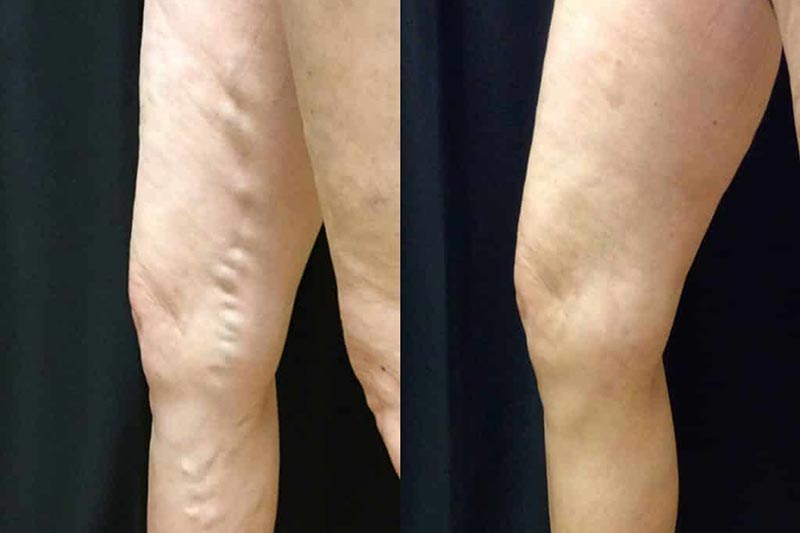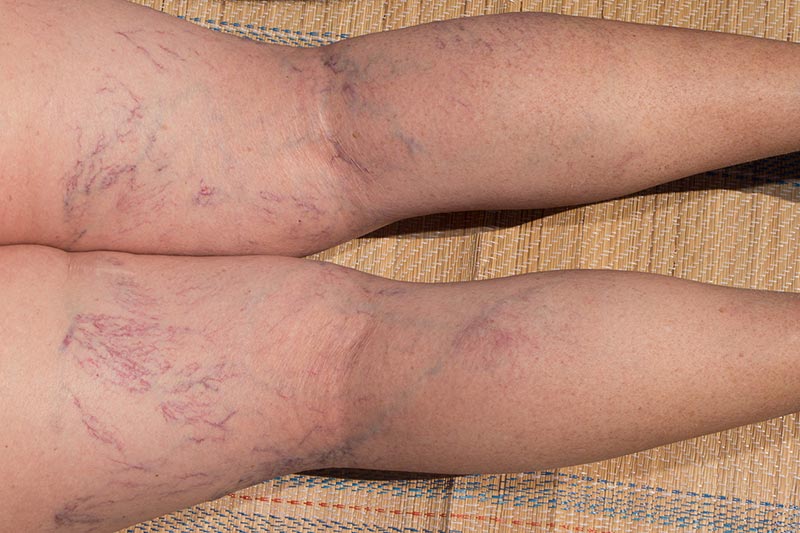



Varicose veins are a complex network of dilated and tortuous veins that develops due to weakened walls of deep and superficial veins and the resulting backflow of blood caused by impaired venous valve function. Normally, thanks to venous valves designed to ensure one-way flow, blood flows against gravity back to the heart. If these valves fail to close properly, blood pooling and venous dilation inevitably occur, particularly in the legs. This process, also known as venous regurgitation, constitutes the fundamental pathophysiology of varicose veins.
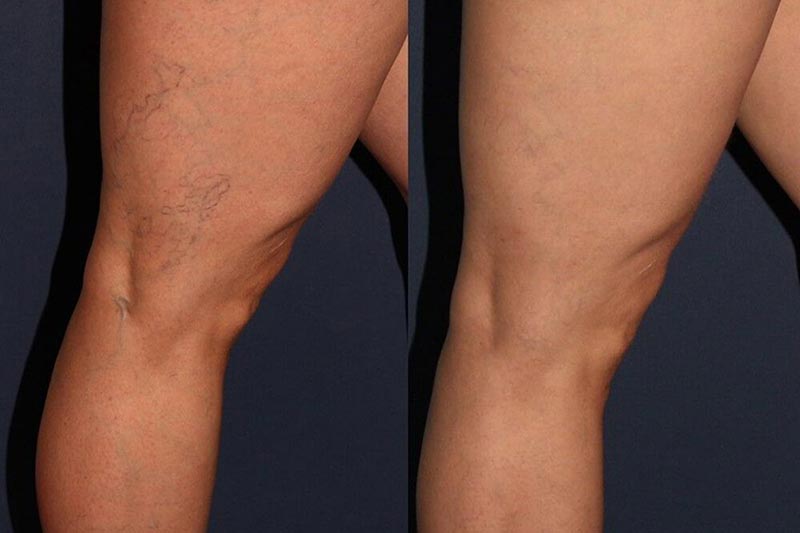
A brief summary of varicose veins and its physiological role
- Blood return: The venous system completes the cycle by transporting oxygen-rich blood back to the heart.
- Pressure equalization: Muscle movements (especially when walking) compress the veins in the legs, pushing the blood upwards; this mechanism is known as the “muscle pump”.
- Maintaining fluid balance: Venous vessels collect interstitial fluid from the tissues and integrate it into the bloodstream, thus preventing the formation of edema
These functions are impaired in the development of varicose veins. Due to insufficient closure of the venous valves, blood slowly pools in the veins, leading to stretching and dilation of the vein walls. This results in swelling, a feeling of heaviness, and sometimes pain in the legs.
Why do some people develop varicose veins more frequently?
Many factors can increase the strain on the venous system and thereby create a predisposition to the development of varicose veins:
- Genetic predisposition: A family history of varicose veins indicates a weakening of the valve and vessel wall structure.
- Hormonal changes: Fluctuations in estrogen and progesterone levels, especially during pregnancy and menopause, can reduce the elasticity of the valves.
- Lifestyle: Prolonged standing, sitting, and lack of exercise lead to blood pooling in the legs.
The interaction of these factors leads to increased venous pressure and the formation of varicose veins. For example, a job that requires prolonged standing increases the risk that the venous valves will no longer close properly.
A look at its other functions in the body
Varicose veins should not be viewed solely as an aesthetic problem; they can also indicate more serious health issues. Impaired venous function increases the likelihood of blood clots (thrombi) forming and the risk of deep vein thrombosis. If chronic venous insufficiency develops, persistent swelling and skin changes on the legs can also occur. This condition delays wound healing and can sometimes lead to the formation of ulcers.
Expert opinion: “Although varicose veins cause only mild discomfort in their early stages, they can compromise the integrity of the vascular system over time. Early diagnosis and lifestyle adjustments play a crucial role in slowing their progression.“
Signs to look out for in everyday life
- Prominent veins: The appearance of bluish-green, swollen veins, especially on the inner and outer sides of the legs.
- Pain and burning: A burning sensation or rapid fatigue that occurs after prolonged standing.
- Swelling: Symptoms include swelling of the legs, which increases in the evening and decreases somewhat in the morning.
These symptoms indicate a dysfunction of the venous system and remind you to see a doctor.
Summary
Varicose veins develop when the venous valves no longer close properly and the vein walls weaken, causing blood to flow backward. Normally, the venous system transports blood to the heart, but due to this dysfunction, it can no longer perform this function. This leads to symptoms such as pain, swelling, and bruising in the legs. Genetic, hormonal, and lifestyle factors increase the risk of developing varicose veins. Early diagnosis is crucial to control the progression of the disease and prevent potential complications.
Following this basic definition and physiological explanation, the next section will provide a more detailed look at the mechanisms of varicose vein formation.
Mechanism of varicose vein formation: Diseases of the blood vessels and heart valves
The main cause of varicose veins is the loss of function of the venous valves, which regulate blood flow in the venous system. This structural defect occurs particularly frequently in the legs, as gravity makes it more difficult for blood to return to the heart. Weakening or complete failure of the venous valves leads to blood loss (reflux) and dilation of the vein walls.
Normal function of the valves
- One-way flow: The valves ensure that blood flows only towards the heart and prevent backflow.
- Pressure equalization: Muscle contractions (for example, when walking) create positive pressure in the blood vessels; this pressure closes the valves and helps to push the blood upwards.
When the valves no longer function properly, the continuous increase in pressure on the vessel wall causes the elastic fibers to stretch and the vessels to eventually swell.
When the valves no longer function properly, the continuous increase in pressure on the vessel wall causes the elastic fibers to stretch and the vessels to eventually swell.
- Genetic predisposition – A family history of varicose veins suggests that the venous valve structure may be weaker from birth.
- Hormonal changes – Fluctuations in estrogen and progesterone levels, especially during pregnancy, can reduce the contraction of the heart valves.
- Aging – Over time, the vessel walls and valve tissue lose elasticity; this weakens their ability to close.
- Chronic venous pressure – Prolonged standing, overweight and obesity increase venous pressure in the legs and thus put strain on the venous valves.
If one or more of these factors occur together, valve leakage is inevitable.
The chain reaction of reflux and venous overstretching
Insufficient valve closure leads to a backflow of blood, a condition known as venous reflux. Reflux triggers the following processes:
- Stretching of the blood vessel wall: When blood is pressed against the inner wall of the vessel, the elastic fibers of the wall are stretched excessively, leading to a widening of the vessel.
- Inflammation: High pressure and tension cause microscopic tears in the blood vessel wall, leading to the accumulation of inflammatory cells and swelling in the surrounding tissue.
- Venous hypertension: Continuously increasing pressure creates a form of hypertension in the venous system; this can cause small blood vessels (capillaries) under the skin to burst, resulting in bruising (hematomas).
This mechanism shows that varicose veins are not only an aesthetic problem, but also have a pathophysiology that increases the risk of skin ulcers, skin thickening (lipodermatosis) and even thrombosis.
Structural changes in the vessel wall
The process of valve dysfunction leads to changes in the three main layers of the vessel wall (intima, media and adventitia):
- Intimal thickening: Damage to the endothelial cells leads to the accumulation of connective tissue and a narrowing of the lumen.
- Medial loss of elasticity: The degeneration of smooth muscle fibers and elastic fibers leads to a loss of resistance to wall tension.
- Adventitial dilation: An increase in connective tissue leads to a thickening of the outer vessel segment and indirectly creates higher pressure.
These structural changes underscore the need for early diagnosis and intervention to slow down or stop the progression of varicose veins.
“Loss of function of the venous valves is the main cause of varicose veins; understanding the underlying factors of this disease is a crucial step in developing effective treatment strategies.”
A practical consideration: The impact of the mechanism on everyday life.
- Prolonged standing: If the leg muscles are not sufficiently active, the venous pumping action decreases, which increases the pressure on the venous valve.
- Tight shoes: The compression around the ankle increases pressure because it restricts venous outflow.
- Lack of exercise: Regular exercise supports the heart valves through muscle contractions; lack of exercise creates an ideal breeding ground for increased reflux.
These everyday factors can directly affect the function of the venous valves and thus increase the risk of varicose veins.
Future trends and preventive measures
Treatments targeting the mechanism of venous valve insufficiency typically involve minimally invasive procedures such as valve repair (scleroplasty) or laser ablation. These interventions stop the leakage and allow the vein wall to regenerate. Additionally, lifestyle changes (regular walking, weight control, compression stockings) relieve pressure on the venous valve and prevent the formation of new varicose veins.
This information, along with the symptoms of varicose veins discussed in the next section, helps patients understand when they should see a doctor.