




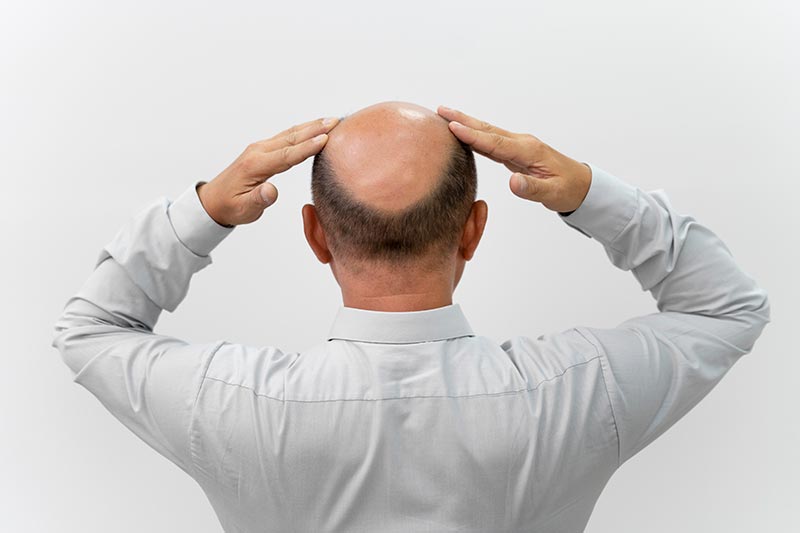
Many people with hair loss are looking for a permanent solution. In a hair transplant, healthy hair follicles are taken from a donor area (usually the nape of the neck) and transplanted to the balding areas. The procedure of hair implant is performed under local anesthesia and aims to restore a natural-looking head of hair.
Clinics in the Side and Manavgat regions offer hair transplants with customized solutions and modern techniques. This article explains what a hair transplant is, the methods used, and how the procedure is performed.
Who is a suitable candidate for a hair transplant, what is the recovery process like after the procedure, and what advantages do clinics in the region offer? Here you will find answers to all these questions and get all the information you need to make an informed decision about a hair transplant.
Who is a candidate for a hair transplant?
The success of a hair transplant depends on the type of hair loss, the quality of the donor area, and the patient’s overall health. Not everyone suffering from hair loss is a suitable candidate for a hair transplant; therefore, selecting the right candidates is crucial for a successful outcome.
Criteria for hair transplantation in women
Hair transplantation in women requires a different assessment than in men. Women typically suffer from diffuse hair loss, where thinning begins on the crown. In this case, sufficient hair density in the donor area is necessary.
Hormonal changes, the postpartum period, or menopause can cause hair loss. First, the cause of the hair loss should be determined and any active hair loss stopped. In cases of persistent hair loss, a hair transplant can be considered.
For a hair transplant in women, a clearly defined hairline is not necessary. The goal is to increase overall hair density and fill in thinning areas. Since women, unlike men, generally do not experience complete hair loss, the surgical planning also differs.
Assessment in cases of baldness and hair loss
The degree of hair loss is an important indicator for a hair transplant. In men with hereditary hair loss, the hair loss is particularly noticeable at the hairline and on the crown. A hair transplant offers a permanent solution by transplanting hair follicles to these areas.
Hair loss needs to stabilize. A hair transplant during active hair loss may not produce the desired result. Generally, in men over 25, the pattern of hair loss is more clearly recognizable, and a hair transplant can be planned accordingly.
The degree of hair thinning should also be assessed. For mild thinning, medication may be sufficient. For moderate to severe thinning or baldness, a hair transplant is the more effective option. The doctor will determine the extent of the bald patch and the number of grafts required.
The importance of donor site density
The nape of the neck and temples are typically used as donor areas. The hair follicles in these areas are genetically resistant to hair loss. Hair density in the donor area significantly influences the success of a hair transplant.
Hair density should be between 50 and 80 grafts per square centimeter. Without sufficient density in the donor area, the desired result cannot be achieved. The doctor assesses the quality of the donor area during the examination and determines the maximum number of grafts that can be extracted.
The nape of the neck and sides of the throat are examined to assess the quality of the hair follicles. Body hair can be an alternative source for individuals with weak donor areas. However, this method is only preferable if a limited number of follicles are needed.
Comparison of hair transplantation methods and techniques
There are three main methods of hair transplantation, each with its own specific application techniques. The number of grafts, the healing process, and the details of the procedure differ depending on the method.
FUE hair transplant
FUE (Follicular Unit Extraction) is currently the most widely used method of hair transplantation. In this technique, hair follicles are individually extracted from the donor area (usually the nape of the neck) using a special motor.
The procedure uses a micro-Pencler with a diameter of 0.6–0.9 mm. It is a delicate procedure because each graft is harvested individually. No scars result from the skin strips.
The procedure uses a micro-Pencler with a diameter of 0.6–0.9 mm. It is a delicate procedure because each graft is harvested individually. No scars result from the skin strips:
- Leaves minimal traces
- • The recovery time is short (7-10 days)
- The operation is performed under local anesthesia
- • Suitable for short hairstyles
In the more advanced version, known as sapphire FUE, the channel is created using instruments with sapphire tips. This method allows for more precise results and is gentler on the tissue. Between 4,000 and 5,000 grafts can be transplanted in a single session.
DHI hair transplantation and Choi-Pen application
DHI (Direct Hair Implantation) means direct hair transplantation. This technique uses a special pen-shaped instrument called the Choi Pen.
In DHI hair transplantation, the channel opening and the insertion of the grafts occur simultaneously. The Choi Pen implants the hair follicles into the skin as soon as they begin to grow. This feature distinguishes the procedure from other methods.
Key features of DHI:
- The transplants remain outside the body for a shorter period of time
- There is no channel opening phase
- Denser planting is possible
- The transplant is easier between the existing hairs
The Choi Pen requires a high degree of skill. The experience of the surgical team significantly influences the outcome. The treatment time is somewhat longer than with the FUE method. However, the graft survival rate is high because the hair follicles remain outside the tissue for a shorter period.
FUT method and other approaches
In FUT (Follicular Unit Transplantation), also known as the strip method, a strip of skin is taken from the donor area, which is then separated into follicular units under a microscope.
This method leaves a linear scar on the back of the neck. Between 3,000 and 4,000 grafts can be harvested in one session. Nowadays, the FUT method is less preferred because it leaves visible scars.
Reasons why FUT is preferred in some situations:
- Treatment of large areas in a single session
- The cost per transplant is lower
- Used in cases requiring a very high graft volume
New technologies such as robot-assisted hair transplantation have also been developed. These systems perform the FUE technique using robotic arms. The precision is higher, but the costs are also higher. It may not be suitable for every patient, and monitoring by an experienced surgeon is still necessary.
How is a hair transplant performed? Phases and surgical procedure
A hair transplant involves several steps, each crucial for a successful outcome. The procedure begins with hair analysis and ends with the extraction and implantation of the hair follicles.
Hair analysis and hairline design
The first step in a hair transplant is a detailed hair analysis. Your doctor will examine your hair loss pattern and determine the number of hair follicles.
In this phase, your face shape and age are taken into account. The hairline is particularly important, as it is crucial for a natural appearance.
During the hairline design process, forehead width and symmetry are checked. Your doctor will draw the ideal hairline with you and obtain your approval. This design serves as a guide throughout the entire procedure.
Selection of donor site and shaving procedure
The nape of the neck is typically chosen as the donor area. The hair follicles in this area are genetically resistant to hair loss.
Before the procedure, the donor area is shaved short. Some techniques only require shaving small areas, while others require shaving a larger area.
Scraping facilitates the removal of the transplant and allows for a more precise procedure. Your doctor will inform you about the scraping method best suited to you before the operation.
Local anesthesia and graft removal
Hair transplantation is performed under local anesthesia. First, the donor area is numbed, then the area where the hair is to be transplanted.
You will not feel any pain during the procedure after the anesthesia has been administered. You may only feel slight pressure.
The grafts are extracted individually using specialized instruments. Each graft contains one or more hair follicles. The extracted grafts are stored in special solutions to maintain their viability.
At this stage, the doctor extracts the hair follicles with minimal damage. The number of grafts depends on the size of the area to be transplanted.
Related Posts
09/08/2026
What are dental implants in Antalya? Basic concepts
Dental implants are a treatment method in which a titanium screw is inserted into the…
06/08/2026
Cosmetic Surgery: A Comprehensive Guide
Augmentation is a collective term for aesthetic procedures performed to compensate for volume loss in…
23/07/2026
What are varicose veins? Treatment options and modern therapies in Antalya
Varicose veins are a common venous disorder caused by the dilation and twisting of veins…
04/07/2026
Skin Rejuvenation and Laser Hair Removal Options
Modern aesthetic treatments, thanks to non-surgical aesthetic techniques, make it possible to preserve the youthful…